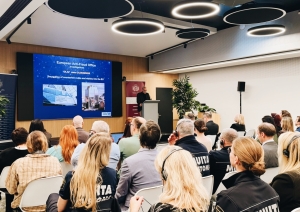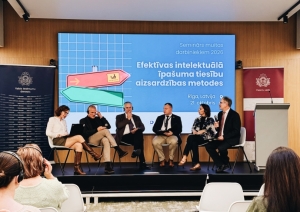


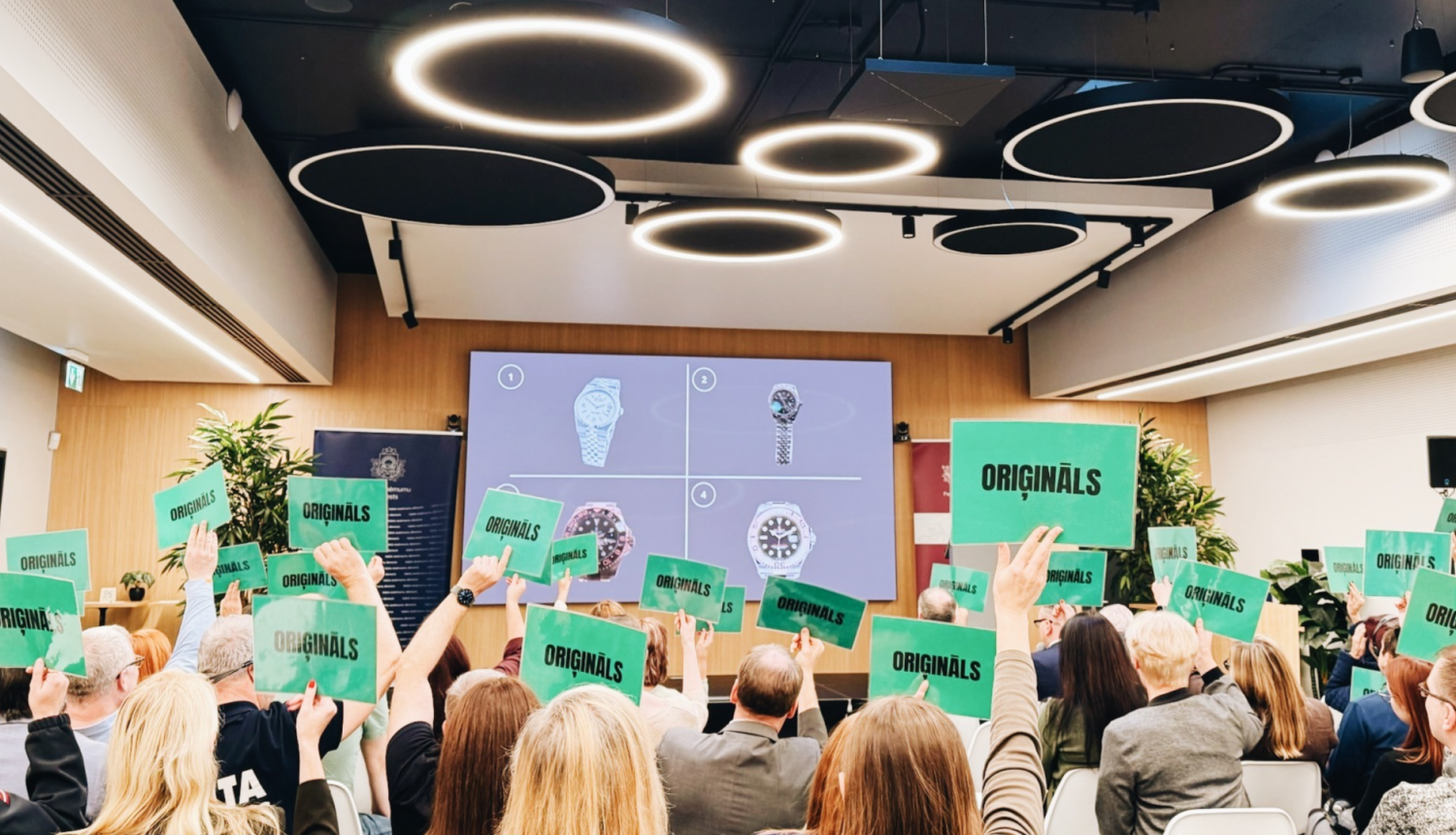
As counterfeit goods become increasingly widespread and the schemes used to distribute them grow ever more sophisticated, cooperation among all parties involved is more important than ever. At the annual seminar organised on 21 October by the Patent Office of the Republic of Latvia (LPO) and the Customs Board of the State Revenue Service (SRS), entitled “Effective Methods of Enforcing Intellectual Property Rights 2026: Identification and Control of Counterfeit Goods in the Food Sector”, experts and industry representatives stressed that effective action against counterfeiting is only possible when public authorities, rights holders and entrepreneurs work together, exchange information and coordinate their actions.
The protection of intellectual property extends beyond the registration of rights and also requires practical day-to-day action. Close cooperation between law enforcement authorities, rights holders, entrepreneurs and other stakeholders therefore plays a crucial role. At the same time, counterfeiters undermine public trust in both institutions and entrepreneurship.
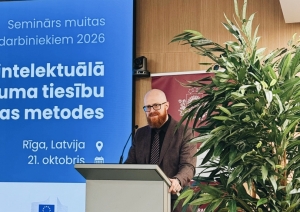
“Counterfeiting of food products and beverages clearly demonstrates that counterfeiting is not merely a matter of the unauthorised use of a company’s trademark. It concerns fair competition, investment in innovation, consumer confidence and, most importantly, consumer safety and health. The Patent Office can help protect industrial property, but we all recognise that any system is only as strong as the parties involved and the strength of their cooperation,” said Agris Batalauskis, LPO Director, when opening the seminar.
Participants noted that combating intellectual property infringement is becoming increasingly challenging, as counterfeiters continue to refine their methods. Regular exchanges of experience and coordinated action at both national and European Union level are therefore essential.
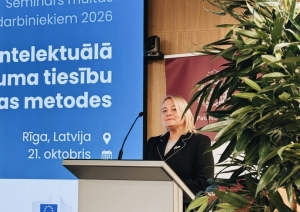
Sanita Dzene, Deputy Director of the SRS Customs Board, particularly emphasised the shared understanding of the importance of cooperation among all parties involved: “The protection of intellectual property rights is becoming increasingly complex. It makes coordinated action and the exchange of experience with all parties involved especially important in strengthening the protection of intellectual property and the European Union’s internal market against counterfeit products. We must not allow dishonest persons to exploit the trust of others and break the law.”
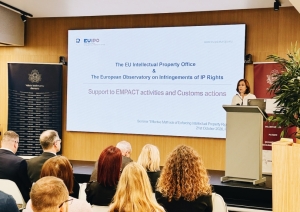
Ms Patricia Garcia-Escudero Marquez, Director of the European Observatory on Infringements of Intellectual Property Rights at the European Union Intellectual Property Office (EUIPO), highlighted the vital role customs authorities play in protecting intellectual property rights, consumers and fair business practices. She noted that seminars and exchange of experiences help keep pace with emerging counterfeiting trends, thereby strengthening the fight against the distribution of counterfeit goods.
Although counterfeit goods are often associated with clothing, luxury products and electronics, counterfeit food and beverages remain a significant issue that can threaten consumer health and undermine trust in responsible producers.
Experts explained that food fraud and counterfeiting take many forms, including substituting expensive ingredients with cheaper alternatives, falsifying composition, misrepresenting a product’s origin, or using misleading labelling, such as marketing honey from China that is in fact a sugar-based product.
Counterfeiting of premium wine and spirits brands is also widespread, with cheaper products being passed off as luxury beverages. Participants noted that schemes for producing and distributing counterfeit alcoholic drinks are becoming increasingly sophisticated and may even involve employees of legitimate enterprises. As Artis Melderis, Head of the Division of Information Analysis and Emergency Response of the Food and Veterinary Service, pointed out, food fraud is also detected in Latvia and is most commonly linked to the use of lower-cost ingredients, concealment of origin and replacement of labels.
The seminar also examined risks associated with food supplements and medicinal products. Experts warned that counterfeit medicines and supplements pose direct threats to public health. In the European Union, consumers are increasingly purchasing such products not only on the internet, through social media and e-commerce platforms, but also from beauty salons and fitness clubs, often being unaware of the potential risks. Products with unsuitable ingredients, misleading labelling or even medicines unavailable on the legal market are frequently offered for sale. Experts further emphasised that counterfeit and illicit medicines are sold not only through fake online pharmacies but also through other retail channels.
Participants agreed that the fight against counterfeiting is a long-term process in which cooperation, information exchange and coordinated action among all parties involved are decisive factors. Consumers, intellectual property and fair business practices can be effectively protected only by joint efforts.
At a separate expert discussion held on 22 October, particular attention was paid to the practical challenges in combating counterfeiting. Participants highlighted the need for more effective collection and analysis of data held by different institutions in order to identify not only individual infringements but also broader distribution networks and their organisers. Key challenges identified included combating counterfeits in e-commerce, difficulties in proving traders’ liability as they themselves can be misled by suppliers, and the limited involvement of rights holders due to procedures often being lengthy and costly in relation to the potential benefits. Participants also stressed the importance of developing training systems for law enforcement authorities and improving specialisation in the investigation and adjudication of intellectual property infringement cases.
The discussion brought together experts from the LPO, the Ministry of Justice, the SRS Customs Board, the Health Inspectorate, the State Police, the Riga City Court, the Association of Patent Attorneys of Latvia, the anti-counterfeiting network REACT, the Food and Veterinary Service, as well as representatives of EUIPO, the European Anti-Fraud Office (OLAF) and the Cyprus Customs Department.